


'The Hill' Bickwell Valley
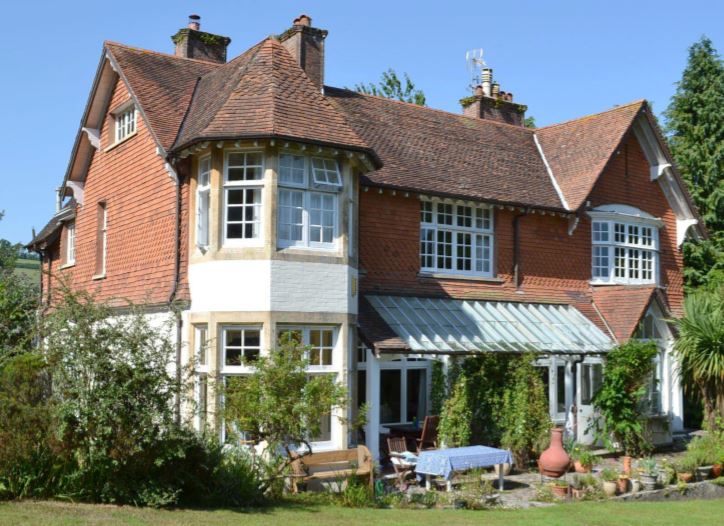
Mrs Fell-Smith lived at The Hill from 1922
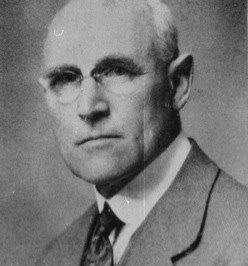
She was a widow and in reality just plain Mrs Smith (wrongly adopting her late husband’s middle name ‘Fell’ and hyphenating it – sounded better in Sidmouth inter-war Society?)
She was born Florence Jane Neumann at Awliscombe 1860.
Her grandfather Charles William Neumann was of Jewish descent and according to early census’s was born in Dantzig, Russia about 1775.
(Gadansk, now in Poland, but various partitions of the country in the late 18th Century resulted in control alternating between Prussia and Russia).
He came to England, certainly by 1803, he was then living in Liverpool and was a merchant. That year he married Jane Stubbs from Cheshire, and either by his own endeavours (or by marriage) became the owner of a Cheshire Salt Mine.
(Still many references in street and place names to Neumann in the Northwich area – including Neumann’s flash, now a nature reserve. A flash is a local name for a shallow lake caused by subsidence from salt mining. Not really mined in conventional sense as the salt is brought to the surface by pumping brine).
He had three sons – Charles, William and George. Charles & William continued in their father’s footsteps and became wealthy merchants in Liverpool. (Each left estates of over £100k on their deaths towards the end of the 19th Century).
George, born 1817, was Florence’s father and had amassed a fortune of £143k by the time he died in 1898. How did he do it?
Early in George’s life he had decided on an engineering career and got a job working for the famous railway engineer Joseph Locke (responsible for many of Britain’s early railways – and in fact drove the Rocket on the trials for the Liverpool/ Manchester Railway – first passenger railway in the world). By 1836 George was described as Joseph Locke’s star pupil.
In 1840 he want to France as resident engineer to the Paris-Rouen railways and for nine years was engaged in lines between Paris-Rouen, Rouen-Le Havre and Paris-Cherbourg. He returned to France again in the early 1850s as Chief Engineer of the Rouen-Dieppe Railway.
The French admired his work so much, he was awarded the Legion d’Honeur. His previous boss Joseph Locke was MP for Honiton 1847–1860 and it was natural for George to once again follow in his footsteps. He bought Tracey House at Awliscombe where Florence was born. (Tracey House remains in the same family today?)
Florence’s husband was Walter Fell Smith and they married in 1880. He was born in Surrey in 1840 (so 20 years older than Florence).
His father Noel Thomas Smith was born in Jamaica where the family had property interests at Spanish Town Estate (the former capital of Jamaica before it was moved to Kingston).
Noel was also a merchant, but seems to have also operated as a ship and insurance broker. He retained the Jamaica land holding which was worked on by Slaves.
Although the slave trade was abolished in 1807, it was not until 1834 that slavery was officially abolished throughout the British Empire. The Slavery Abolition Act provided for compensation to slave owners for the loss of their property. Some £20 million was set aside by the Government for this purpose (a huge sum of money - some 40% of annual government expenditure). Noel was awarded £342.5s.10d in compensation for 18 slaves in 1836. (This was small beer compared with some of the claims which provided capital for the great and the good! – eg the Bishop of Exeter received £12,700 for about 600 slaves!)
Noel’s wealth didn’t last long, in 1844 then operating as a ship owner he was declared bankrupt.
Like many bankrupts he seems to have bounced back and by 1851 he was living in Worcester and was Secretary of the Oxford, Worcester & Wolverhampton Railway – it is probable that Walter would have met Florence through this railway connection.
With his brother Edward, Walter embarked on a career in the Empire, working for the Bengal Constabulary. His brother was murdered in the Indian Mutiny.
He alternated life between England and India and on his marriage to Florence bought Deer Park, Buckerill (now the Hotel). This served as the family home. They had three daughters (2 born in India and 1 in Devon) and a son born in Manchester where after retiring from India he became Deputy Chief Constable.
He lived at Deer Park until his death in 1922, when Florence moved to The Hill.
So there we have it, a tale of immigration from eastern Europe, the industrialisation of Victorian England, Empire, Slavery and wealth gained and lost – quite a tale!
-
The House was built in 1907 – sited on northern side of plot (normal Sampson idea).
-
Outside very reminiscent of Valley Mead, Sampson’s own house built a few years earlier. Render with hanging at first floor level. Tile hanging and roof tiles all small plan tiles – decorative ½ round tiles running as a ‘panel’ on both walls and roof. Nice chunky chimneys – fairly decorative (in time went on to become smaller and more plain).
-
INSIDE
Classic Sampson design with living rooms on south side overlooking garden – only 2 living rooms (cf Valley mead). Ditto bedrooms – 4 principal ones.
Feature of the house is the large hall. (cf Trow Hall – a vestibule entrance and large hall). No morning room – hall acted as a living room with east facing window. (Arts & Crafts architects liked the idea of large hall/living room - reminiscent of medieval buildings)
Servants area separate - Servants’ living room (now kitchen), separate scullery, larder etc and back stairs giving access throughout house and up to 2 servant’s bedrooms – 1 on 1st floor and 1 in attic. -
NOTEWORTHY DETAILS
-
Vestibule – 2 photos of Muttersmoor Lane showing cottages and plot, also tiled floor.
-
Hall – Drawing of typical Sampson House in Hall. Original fireplace, bell push (panel in Kitchen – still working). Panelling, Door Furniture
-
Living Rooms – Spacious, well proportioned and south facing
-
Fireplaces (including dutch tiles), bell pushes, loggia.
-
Landing – Spacious – large window north facing.
-
View from window - 1907 on drainwater hopper and roof tile patterns.
-
Barrel vaulted roof – details of fruit made from paper mache
-
Prepared by Martin Mallinson, committee member of The Sampson Society
2012